
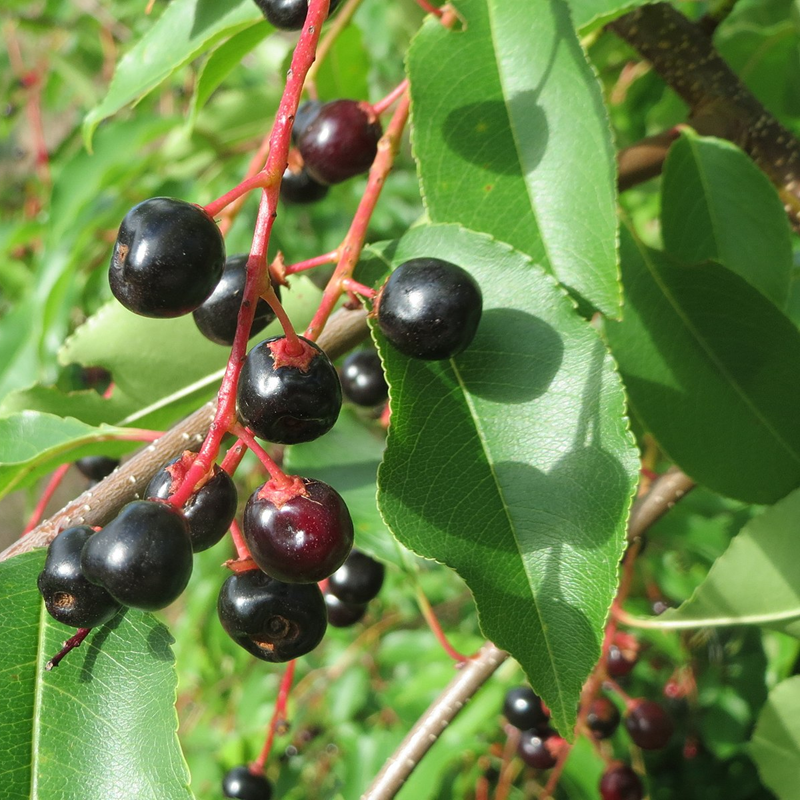
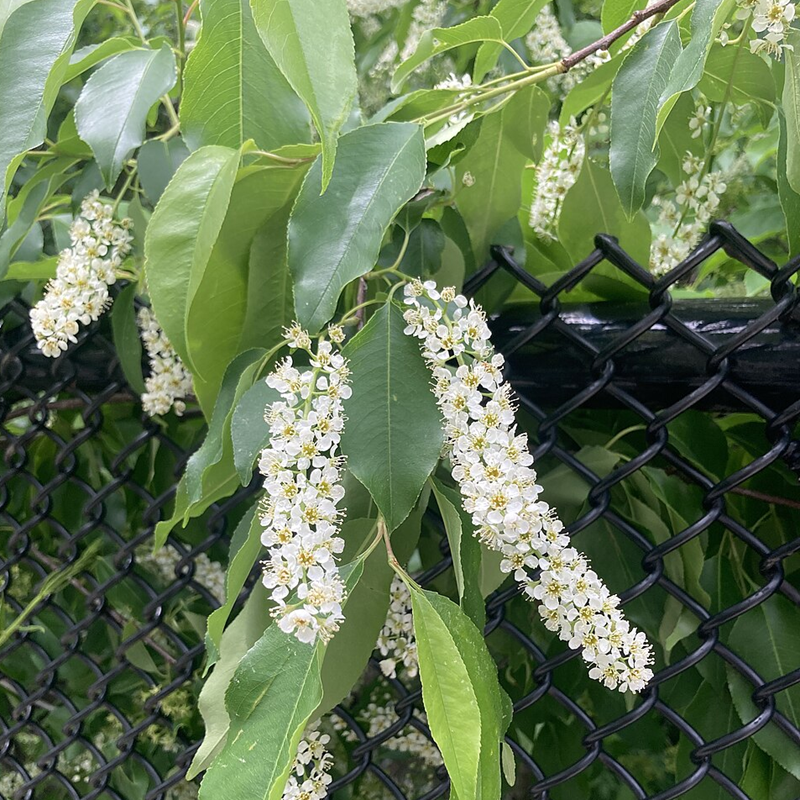
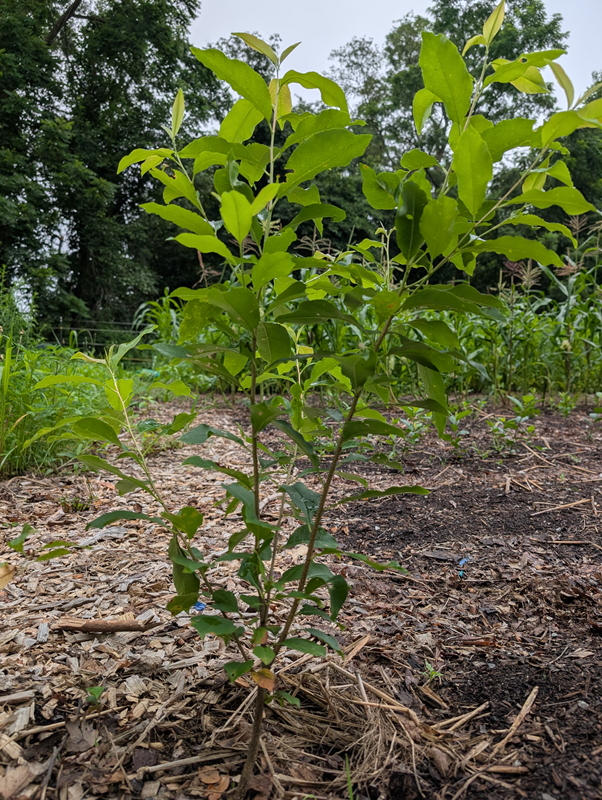
Prunus serotina is distributed throughout a wide native range in eastern and southwestern North America. The dark red / black fruits are edible, with a bittersweet flavor, and are used in cooking and beverages. Birds and mammals also feed on the tiny cherries. Other parts of the plant contain amygdalin, which is responsible for the distinctive cherry fragrance of the bark and crushed leaves. Wild black cherries have better pollination when growing in groups of 3 or more. The tree is valuable to pollinators because of its early spring blooms, and it is among the first to ripen fruits in early summer.
Sun: Full Sun, Partial Shade
Moisture: Moist, Average
Zones: 3-9
Local regulations prevent us from shipping this product to the following locations:
AK, CA, CO, HI, ID, OR, WA